AMDF Advocates for Policy Framework to Strengthen Free and Compulsory Education for Girls in Kaduna State
In 2019, the Africa Media Development Foundation (AMDF), with support from Rise Up and the Public Health Institute and funding from the Cummins Foundation, implemented a project aimed at advancing girls’ access to quality education in Kaduna State.
Project Title: Advocating for Policy Formulation and Adoption of Free and Compulsory Education for Girls in Public Secondary Schools
Project Period: June 2019 – May 2020
Project Background
Kaduna State has historically faced significant challenges in education, including low school attendance, high dropout rates, and gender disparities in school completion. The Kaduna State Development Plan 2016–2020 estimated that approximately 37% of pupils dropped out by Primary Six, with girls experiencing particularly poor completion outcomes.
The Development Plan reported that males had a primary school completion rate of 36.9%, compared with 35.1% for females. At the Senior Secondary Certificate Examination (SSCE) level, the completion rate was 27.84% for males and 23.41% for females.
These disparities highlighted the need for stronger interventions to ensure that girls not only enrol in school but are supported to remain in school and complete their education.
Supporting Government’s Free Education Pronouncement
On 24 September 2018, the Kaduna State Government announced the introduction of free and compulsory education for girls in public secondary schools across the state. The initiative was intended to remove financial and other barriers preventing girls from accessing and completing secondary education.
However, AMDF observed that the government pronouncement lacked a comprehensive policy document and implementation framework to guide its effective implementation, monitoring and sustainability.
In response, AMDF sought support from Rise Up to advocate for the development and adoption of a policy and implementation framework that would give institutional backing to the free and compulsory education initiative.
The advocacy was designed to support the Kaduna State Government in closing the gender gap in education and ensuring that girls are not only enrolled in school but are retained through completion.
Engaging Key Stakeholders
As part of the advocacy process, AMDF engaged government officials, media executives and other stakeholders to build support for the development of the policy framework.
The Founder and Coordinator of AMDF, Iliya Kure, led a delegation to the Ministry of Human Services and Social Development, where the team sought the support of the Commissioner, Hafsat Baba, for the initiative.
Kure explained that despite the relatively high proportion of girls enrolled in secondary schools in Kaduna State, many girls still dropped out before completing their education.
He noted that the absence of a supporting policy and implementation framework could undermine the sustainability of the government’s free education pronouncement.
According to Kure, the advocacy sought to ensure that the government’s commitment to free and compulsory education for girls was translated into a clear policy backed by an implementation framework.
Mobilising the Media for Advocacy
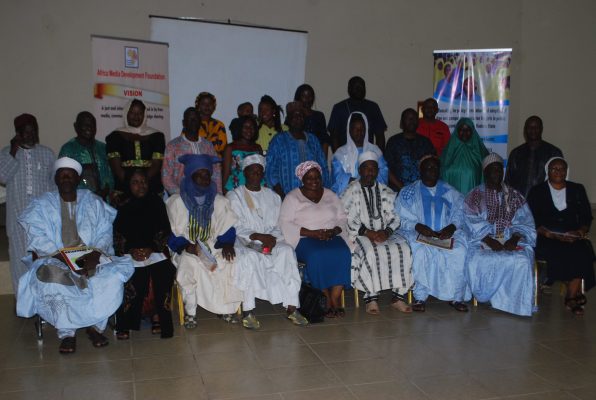
AMDF also convened a breakfast meeting with media executives to sensitise them to the importance of the free and compulsory education programme and to galvanise their support for policy development.
The Executive Director of AMDF emphasised that the benefits of educating the girl child extend beyond individual girls, contributing to stronger families, communities and societies.
He called on media organisations to use their platforms to promote public awareness and generate support for the development and adoption of a policy document and implementation framework for free and compulsory education for girls in public secondary schools.
Media executives were encouraged to direct producers, presenters and reporters to incorporate the issue into education and current affairs programmes, radio discussions and other media platforms.
The Programmes Manager of Freedom Radio, Zakari Aminu, commended AMDF’s efforts to promote girls’ education and pledged the station’s support for the advocacy process. He also acknowledged AMDF’s contribution to strengthening the capacity of journalists in Kaduna State.
Similarly, the Acting General Manager of Liberty Radio and Television, Abdulkadir Lere, described the initiative as timely and commendable. He pledged the station’s support while noting that the absence of a policy framework remained a major challenge to the effective implementation and sustainability of free education for girls.
Projected Impact
The 2016–2020 Kaduna State Development Plan indicated that only about 23% of female students completed school. AMDF’s advocacy therefore sought to contribute to a significant improvement in girls’ educational outcomes.
With the development, adoption and implementation of an appropriate policy framework, the Kaduna State Ministry of Education projected that the completion rate of female students in public secondary schools could increase from approximately 23% to 53%, potentially benefiting more than 224,000 girls across the state.
The project therefore focused not only on access to education but also on retention, completion, policy implementation and sustainability.
Government Commitment
During the engagement with AMDF, Commissioner Hafsat Baba expressed appreciation for the Foundation’s advocacy and indicated her willingness to support efforts aimed at promoting girls’ education in Kaduna State and the wider region.
She reaffirmed the importance of removing barriers to girls’ education and noted the continued relevance of the state’s free basic education policy.
AMDF’s Call to Action
AMDF called on government institutions, media organisations, civil society organisations, community leaders and other stakeholders to support efforts towards the development and implementation of a comprehensive policy framework for free and compulsory education for girls.
The Foundation further encouraged stakeholders to play an active role in monitoring implementation once the policy was adopted, ensuring that commitments made by government translated into improved enrolment, retention and completion rates for girls.
Through this initiative, AMDF demonstrated its commitment to using advocacy, media engagement and stakeholder mobilisation to influence policies that promote equitable access to education and advance the rights and opportunities of girls in Kaduna State.
The project ultimately sought to ensure that every girl in Kaduna State has the opportunity not only to enter school, but to remain in school, complete her education and realise her full potential.